Cryptocurrency Betting Guide
NBA Crypto Betting: The Complete 2026 Guide to Cryptocurrency Basketball Wagering
 Available in US
Table of Contents
- What You Need to Know Before Placing Your First Crypto Bet on NBA
- Why Cryptocurrency Is Reshaping NBA Betting
- UK Legal Landscape: What British Bettors Must Know in 2026
- Best Cryptocurrencies for NBA Betting: Bitcoin, Ethereum, and Stablecoins
- NBA Bet Types You Can Place with Cryptocurrency
- How to Choose a Crypto Sportsbook for NBA Betting
- Depositing and Withdrawing Crypto at NBA Sportsbooks
- Security and Provably Fair Betting: How Blockchain Protects You
- Responsible Gambling: Protecting Yourself in Crypto Betting
- The Future of NBA Crypto Betting: 2026 and Beyond
- Frequently Asked Questions About NBA Crypto Betting
- Your Blueprint for Smarter NBA Crypto Wagering
Your edge in NBA crypto wagering

Three years ago, I watched a mate wait eleven days for a bank wire to clear from an offshore sportsbook. Eleven days. The Lakers had already played six games by the time his winnings landed. That frustration – shared by thousands of British bettors – pushed me to dig deeper into cryptocurrency wagering. What I found changed how I approach NBA betting entirely.
The global sports betting market sits at $112.26 billion in 2025 and is projected to reach $325.71 billion by 2035. Within that explosion, crypto gambling has carved out its own trajectory – climbing from a $50 million niche in 2019 to $250 million by 2024, with projections pointing toward $400 million by 2028. But those headline numbers only tell part of the story. The real shift is happening in how punters interact with sportsbooks.
Traditional betting platforms force you through hoops: identity verification delays, restricted payment methods, withdrawal limits that make no sense. Cryptocurrency sidesteps most of these irritations. You control your funds. Transactions confirm in minutes rather than days. And the pseudonymous nature of blockchain technology offers financial privacy that High Street bookmakers cannot match.
This guide exists because most crypto betting resources ignore the UK completely. British bettors operate under different rules – and in 2026, those rules are shifting. The UK Gambling Commission is actively exploring pathways for licensed crypto payments. The FCA’s new crypto regime lands in October 2027. Understanding the regulatory landscape separates informed punters from those who stumble into trouble.
I have spent nine years analysing cryptocurrency sportsbooks and tracking UK regulatory compliance for basketball wagering. This guide compiles everything I have learned – from choosing the right cryptocurrency to understanding provably fair verification. Whether you are converting your first Bitcoin into betting funds or refining your existing approach, the next sections will give you the edge.
What You Need to Know Before Placing Your First Crypto Bet on NBA
- Legal status in the UK: Crypto payments are not currently licensed by the UK Gambling Commission, but offshore platforms operating under Curacao or Malta licences accept British players – with notable trade-offs in consumer protection.
- Best cryptocurrencies: Stablecoins like USDT and USDC will account for over 70% of crypto betting transactions by 2026, offering volatility protection that Bitcoin cannot match.
- Transaction speed advantage: Bitcoin deposits confirm in 10-20 minutes; Lightning Network withdrawals process in seconds – compared to days for traditional bank transfers.
- Platform selection matters: With 531 unlicensed operators actively targeting UK bettors, verifying licensing credentials before depositing is non-negotiable.
- Responsible gambling applies double: The 24/7 accessibility and pseudonymous nature of crypto betting can accelerate problem gambling patterns. Setting deposit limits and using self-exclusion tools is essential regardless of payment method.
Why Cryptocurrency Is Reshaping NBA Betting
I remember placing my first Bitcoin bet during the 2019 playoffs. The Lakers were in a tight series, and I wanted to top up my account at halftime to catch a live spread. With a traditional sportsbook, that would have been impossible – my bank would have flagged the transaction. With crypto, the funds were in my betting account before the third quarter started. That speed changes everything.
Crypto casinos processed $26 billion in wagers during Q1 2025 alone – nearly double the figure from the same period the previous year. NBA sits at the centre of this growth. Roughly 58% of American sports bettors place wagers on basketball, making it the most popular betting sport in the largest gambling market on earth. The NBA’s 82-game regular season delivers betting opportunities nearly every night from October through June. That density pairs perfectly with cryptocurrency’s always-on availability.
Why NBA and crypto fit together: An NBA regular season spans 1,230 games, with most nights featuring 5-10 matchups. Live betting markets open and close constantly throughout each game. Traditional payment delays become catastrophic when you need to fund your account mid-quarter to catch a shifting line.
The privacy argument matters more than casual bettors realise. Dr. Elena Vasquez, a blockchain analyst at BettingEdge Research, put it plainly: “The pseudonymous nature of cryptocurrency perfectly matches bettors who value privacy. Combined with sport’s global fanbase, it is a union made in digital heaven.” For UK punters, where gambling transactions can affect mortgage applications, the ability to separate betting activity from main banking is genuinely valuable.
Speed differences between crypto and traditional payments are stark. Bitcoin deposits typically confirm within 10-20 minutes. Lightning Network withdrawals process in seconds. Compare that against bank transfers taking three to five business days, or card withdrawals stuck in “processing” over weekends.
| Payment Method | Deposit Time | Withdrawal Time | Typical Fees |
|---|---|---|---|
| Bank Transfer | 1-3 days | 3-5 days | Variable, often hidden |
| Debit Card | Instant | 2-5 days | 1-3% on deposits |
| Bitcoin (on-chain) | 10-20 minutes | 10-60 minutes | Network fee only |
| Lightning Network | Seconds | Seconds | Negligible |
| USDT (TRC-20) | 1-3 minutes | 1-3 minutes | Approximately $1 |
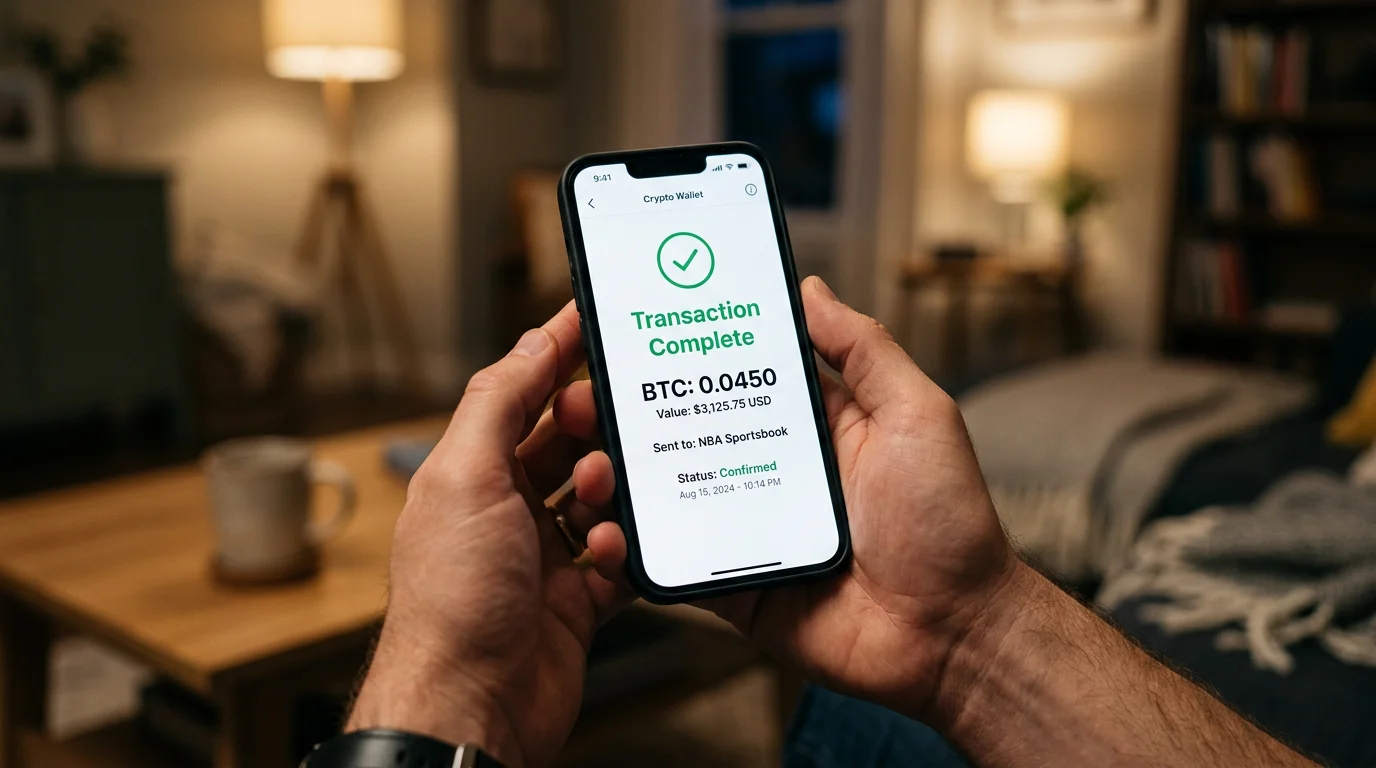
Beyond speed and privacy, crypto betting opens access to platforms that traditional payment rails block. UK banks have become increasingly aggressive about declining gambling transactions. Cryptocurrency routes around these restrictions entirely – your funds travel peer-to-peer, without a banking intermediary deciding whether your betting is acceptable.
UK Legal Landscape: What British Bettors Must Know in 2026
Last February, I sat in on an industry webinar where Tim Miller – Executive Director of the UK Gambling Commission – said something that made everyone in the room pause. “We want to begin exploring a potential path forward for creating a way to use crypto assets as a consumer payment option for licensed and regulated gambling in Great Britain.” That single statement represented the most significant regulatory shift in years. The Commission, historically cautious about cryptocurrency, was publicly acknowledging it needed to adapt.
Here is the current reality: UK Gambling Commission licensees cannot accept cryptocurrency payments directly. The Gambling Act 2005 and subsequent licensing conditions require operators to use “real currency” processed through regulated financial institutions. Crypto falls outside that definition. This is not a ban on crypto betting itself – it is a restriction on licensed UK operators offering it as a payment method.
Regulatory timeline to watch: The FCA’s comprehensive crypto regime is expected to launch by 25 October 2027. This framework will bring cryptoassets under formal financial regulation, potentially creating a pathway for the Gambling Commission to license crypto payments. Until then, the current regulatory gap persists.

The Commission’s stance is not arbitrary paranoia. Their research shows that “crypto” is one of the two main search terms leading British players to unlicensed gambling sites. The illegal market now controls an estimated 9% of UK online gambling – representing £379 million in the first half of 2025 alone. That share has ballooned from just 2% in 2022. Miller acknowledged this directly: “There will be significant challenges and risks to overcome when considering this subject, but I very much want us to approach it in a spirit of exploring the art of the possible rather than starting from a position of finding every reason not to innovate.”
The UK gambling industry generated £16.8 billion in Gross Gambling Yield in the year to March 2025 – up 7.3% from the previous year. That revenue base gives the Commission strong incentive to keep betting activity within the licensed ecosystem rather than losing it to offshore operators. The tension between consumer protection and market reality is forcing regulatory evolution.
What this means for you: Betting on NBA with cryptocurrency is not illegal for UK residents. Accessing offshore platforms that accept crypto is legal from the player’s side. However, these platforms operate outside UK regulatory oversight, meaning standard consumer protections – including access to the Alternative Dispute Resolution scheme – do not apply if something goes wrong.
The government has committed £26 million in additional funding to help the Gambling Commission combat the illegal market. Whether this enforcement push succeeds in stemming the tide toward offshore crypto platforms remains to be seen. For now, UK bettors exist in a grey zone – technically permitted to use offshore services, but without the regulatory safety net that licensed operators provide.
For a complete breakdown of current regulations, FCA timelines, and the legal specifics of different licensing jurisdictions, the UK crypto betting regulation guide covers everything in granular detail.
Offshore Crypto Sportsbooks and UK Law
The legality question that keeps surfacing in forums and social media deserves a clear answer: using an offshore crypto sportsbook from the UK is not a criminal offence for the bettor. You are not breaking the law by depositing Bitcoin with a Curacao-licensed operator and placing bets on the Celtics. The illegality, such as it exists, falls on operators marketing to UK consumers without a UK Gambling Commission licence – not on the customers they serve.
That said, operating in this space involves genuine trade-offs. Offshore platforms are not bound by UK advertising standards, responsible gambling requirements, or dispute resolution mechanisms. If a platform decides not to pay out your winnings, your recourse is effectively limited to complaining on Twitter. The licensing jurisdiction – whether Curacao, Malta, or Gibraltar – may have consumer protection frameworks, but enforcing them from the UK is practically difficult.
Do
- Verify the platform holds a valid gambling licence from a recognised jurisdiction
- Keep records of all deposits, withdrawals, and significant bets
- Use platforms with established track records and verifiable ownership
- Set strict deposit limits before you start – offshore platforms may not enforce them for you
Do Not
- Assume UKGC protections apply to offshore operators
- Deposit more than you can afford to lose on any single platform
- Ignore red flags like delayed withdrawals or unresponsive support
- Forget that gambling winnings are currently tax-free in the UK – but crypto-to-fiat conversions may trigger capital gains obligations
Tax treatment adds another layer of complexity. Gambling winnings themselves are not taxable income in the UK for recreational bettors. However, if you are holding cryptocurrency and its value increases between the time you receive it as winnings and the time you convert it to pounds, that gain could theoretically trigger capital gains tax liability. HMRC guidance on crypto remains somewhat ambiguous, and the distinction between “gambling winnings” and “investment gains” is not always clear when the winnings are denominated in an appreciating asset.
Sarah Kline, an expert at LegalGambling.com, offered practical advice: “Expect clearer regulation by 2026, but for now, stick with licensed offshore operators.” That remains sound guidance. The regulatory landscape is shifting toward accommodation rather than prohibition – but we are not there yet.
Best Cryptocurrencies for NBA Betting: Bitcoin, Ethereum, and Stablecoins
A punter I know deposited 0.1 Bitcoin at the start of the 2024-25 season, planning to use it as his NBA betting bankroll. Three months later, Bitcoin’s price had dropped 15%. His betting record was positive – he had actually grown his balance in BTC terms – but when converted to pounds, he was down money. The volatility that makes crypto exciting as an investment makes it treacherous as a betting currency. Understanding which cryptocurrency to use is as important as understanding which bets to place.
Bitcoin remains the most universally accepted cryptocurrency at sportsbooks. Nearly every platform that takes crypto takes BTC. The network is stable, liquid, and familiar. But Bitcoin’s price swings can turn winning bets into losing propositions. Imagine winning a 2.0 odds bet, doubling your stake, only to have Bitcoin drop 10% before you withdraw. Your “win” becomes a loss in real purchasing power.
Bitcoin’s share of crypto gambling transactions is declining – projected to fall to around 60% by 2026 as alternatives gain traction. This shift reflects bettors getting smarter about currency risk. Nobody wants their bankroll management decisions undermined by forces completely unrelated to basketball.
Network considerations for Bitcoin: On-chain Bitcoin transactions cost variable fees depending on network congestion. During busy periods, fees can spike to $20 or more for timely confirmation. The Lightning Network solves this with near-instant, near-free transactions – but not all sportsbooks support it yet.
Ethereum offers some advantages over Bitcoin for technically inclined bettors. Smart contract functionality enables provably fair betting mechanisms and decentralised platforms. Transaction times are generally faster – though gas fees can be unpredictable. During network congestion, an Ethereum deposit might cost more in fees than a small bet would pay out.
The real story in crypto betting is stablecoins. USDT and USDC are projected to account for more than 70% of all crypto betting transactions by 2026. That dominance makes sense: stablecoins maintain a 1:1 peg to the US dollar, eliminating the volatility problem entirely. Your bankroll stays denominated in a predictable currency while you still benefit from crypto’s speed and accessibility.
| Cryptocurrency | Volatility Risk | Transaction Speed | Typical Fees | Acceptance Rate |
|---|---|---|---|---|
| Bitcoin (BTC) | High | 10-60 minutes | $1-20+ | Universal |
| Ethereum (ETH) | High | 1-5 minutes | $5-50+ | Very High |
| USDT (TRC-20) | None | 1-3 minutes | ~$1 | High |
| USDC | None | 1-5 minutes | $1-10 | Moderate |
| Litecoin (LTC) | Medium-High | 2-5 minutes | $0.01-0.10 | High |

Stablecoins processed an astonishing $27.6 trillion in transaction volume during 2024 – exceeding Visa and Mastercard combined. That infrastructure reliability translates directly to betting: stablecoin transactions confirm predictably, fees stay low, and your bankroll value does not fluctuate while you sleep.
For a deep dive into whether Bitcoin or stablecoins suit your betting style, the stablecoins versus Bitcoin comparison breaks down every scenario.
Why Stablecoins Dominate Crypto Sports Betting
When I switched from Bitcoin to USDT for my primary betting bankroll, the mental clarity was immediate. Suddenly, my profit and loss statements made sense. A winning week showed as a real gain; a losing week showed as a real loss. The noise of Bitcoin’s price movements – which had nothing to do with my betting decisions – disappeared entirely.
USDT on the TRC-20 network has become my default recommendation. Transactions cost approximately $1 regardless of size and confirm within one to three minutes. The Tron network handles stablecoin transfers more efficiently than Ethereum’s ERC-20 standard, which can require $5-20 in gas fees during busy periods. Both versions of USDT are widely supported, but always verify which network a platform accepts before sending funds – sending TRC-20 USDT to an ERC-20 address results in permanent loss.
USDC offers similar stability with stronger regulatory compliance – it is fully backed by cash and short-term US Treasury bonds, with regular third-party attestations. Some bettors prefer USDC’s transparency. The trade-off is slightly lower acceptance rates at sportsbooks compared to USDT.
The bankroll management advantages extend beyond stability. With stablecoins, you can track your betting performance in dollar terms directly. Unit sizing becomes straightforward. If you are betting 1% of your bankroll per wager, that percentage stays consistent rather than fluctuating with crypto prices. You can analyse your results accurately because your accounting currency matches your betting currency.
For most NBA bettors, stablecoins offer the best combination of crypto’s advantages – speed, accessibility, privacy – without the volatility that undermines serious bankroll management. Use volatile cryptocurrencies for speculation if you want, but keep your betting funds in a stable denomination.
NBA Bet Types You Can Place with Cryptocurrency
My first profitable NBA season came after I stopped betting every game and started specialising in player props. Understanding the full range of available bet types – and which ones match your knowledge edge – is fundamental to long-term success. Crypto sportsbooks typically offer the same markets as traditional bookmakers, sometimes with better odds due to lower operating costs.
Moneyline bets are the simplest form: pick the winner, collect if correct. NBA moneylines are expressed in American odds format at most crypto platforms. Negative numbers indicate favourites (how much you must wager to win $100), while positive numbers indicate underdogs (how much you win on a $100 stake). Decimal odds, common at European-facing platforms, make calculation easier – multiply your stake by the odds to determine total return.
Example: Lakers vs Celtics moneyline
Lakers: -150 (American) = 1.67 (Decimal) – Bet $150 to win $100 profit
Celtics: +130 (American) = 2.30 (Decimal) – Bet $100 to win $130 profit
Point spread betting is where most sharp action concentrates. The sportsbook assigns a handicap to equalise the perceived chance of either side covering. A -4.5 spread means that team must win by 5 or more points for your bet to cash. Spreads eliminate the lopsided odds of clear mismatches and create closer to 50/50 propositions – though the juice (typically -110 on each side) ensures the house maintains its edge.
Totals (over/under) bets focus on combined scoring rather than which team wins. If the line is set at 224.5, you wager whether both teams together will score 225 or more (over) or 224 or fewer (under). These bets appeal to punters who understand pace-of-play dynamics without necessarily predicting winners.
Calculating your payout on a spread bet:
You bet $55 on the Nuggets -6.5 at -110 odds. The Nuggets win by 10.
Step 1: Your bet covers – Nuggets won by more than 6.5 points.
Step 2: At -110 odds, a winning bet returns your stake plus $50 for every $55 wagered.
Step 3: $55 stake + $50 profit = $105 total return.

Player props let you bet on individual statistical performances: points, rebounds, assists, three-pointers made, and countless combinations. These markets often show larger inefficiencies than game lines because sportsbooks allocate fewer resources to setting them. If you track player workloads, matchup data, and minute projections more closely than the average bettor, props offer exploitable edges.
Futures and outright markets extend across the entire season. Championship winner, conference winner, division winner, MVP, Rookie of the Year – all are available at crypto sportsbooks. These bets lock up your funds for months but can offer substantial value early in the season before the market fully prices in emerging information. The player props betting guide covers strategies for finding value in these individual performance markets.
Live NBA Betting with Crypto: Speed Matters
The first time I funded my account mid-game with Lightning Network, the deposit confirmed before the free throw shooter released the ball. That moment crystallised why cryptocurrency and live betting are natural partners. Traditional payment methods make in-play funding impossible; crypto makes it seamless.
Live betting now accounts for 53.4% of all online wagering activity – and that share is growing at nearly 15% annually. In-play markets for NBA games update constantly: adjusted spreads, live totals, quarter lines, player prop adjustments based on performance. The bettor who can fund their account instantly gains access to opportunities that traditional payment users simply cannot reach.
Lightning Network withdrawals process in seconds – faster than you can refresh the live odds page. During a volatile fourth quarter, the ability to move funds in and out of your betting account in real-time transforms how you can manage positions and hedge exposure.
The speed advantage compounds with knowledge. If you are watching a game and notice a key player pick up early foul trouble, live lines will adjust – but not instantly. The window between recognising an edge and the market catching up might be 30-60 seconds. With crypto already in your account and ready to deploy, you can exploit that window. With traditional payments, you are locked out entirely.
Live betting demands faster decisions with less analysis time. The markets are efficient but not perfectly so, especially on player props that adjust in real-time. Understanding which live bets offer genuine value versus which are market noise takes experience. Start small, track your results honestly, and scale only when your edge becomes clear.
How to Choose a Crypto Sportsbook for NBA Betting
A colleague lost access to roughly $4,000 in winnings when an unlicensed platform he had been using for months suddenly went offline. No warning, no explanation, no recourse. The site had looked professional, offered competitive odds, and processed several withdrawals without issue – until it did not. That experience reinforced a lesson I share constantly: platform selection is not about finding the best odds. It is about finding reliable odds from an operator you can actually trust.
The unlicensed gambling market targeting UK bettors has exploded. Current estimates put 531 illegal operators actively marketing to British players – up dramatically from prior years. These platforms often present polished interfaces, aggressive bonus offers, and crypto-first deposit options. Distinguishing legitimate offshore operators from predatory fly-by-night operations requires deliberate verification.
Licensing is the first filter. Curacao eGaming licences are common among crypto sportsbooks; they provide basic regulatory oversight but limited consumer protection. Malta Gaming Authority licences carry stronger requirements and better dispute resolution mechanisms. Some platforms hold licences from Gibraltar or the Isle of Man – jurisdictions with rigorous standards closer to UK norms. Unlicensed platforms, regardless of how professional they appear, offer zero regulatory protection if things go wrong.
Before depositing at any crypto sportsbook:
- Verify the licence number on the relevant regulator’s public database
- Search for player complaints on independent forums and review sites
- Test customer support responsiveness with a question before committing funds
- Confirm which cryptocurrencies and networks are supported for both deposits and withdrawals
- Review withdrawal limits and processing time commitments
- Check whether the platform offers NBA-specific markets beyond basic lines
- Understand KYC requirements – some platforms require verification for withdrawals above certain thresholds
Sarah Kline’s advice remains pertinent: “Expect clearer regulation by 2026, but for now, stick with licensed offshore operators.” The platforms that have operated reliably for years, built reputations through consistent payouts, and submitted to at least some regulatory oversight are categorically safer than new entrants making bold promises.
NBA market depth varies significantly between platforms. Some crypto sportsbooks offer basic moneylines, spreads, and totals. Others provide extensive player prop markets, alternative lines, quarter betting, and live in-play options rivalling major traditional bookmakers. If player props are your focus, verify that coverage before depositing. Nothing is more frustrating than funding an account only to discover the platform does not offer the markets you actually want to bet.
Red flags that should stop you cold: Missing or unverifiable licence information. Withdrawal complaints that go unresolved. Bonus terms requiring unrealistic turnover. Inability to contact support through multiple channels. Anonymous ownership with no corporate information. If anything feels off, trust that instinct – there are plenty of legitimate platforms available.
The guide to UK crypto NBA betting sites evaluates specific platforms against these criteria if you want detailed comparisons.
Depositing and Withdrawing Crypto at NBA Sportsbooks
The first time I sent USDT to a sportsbook, I triple-checked the wallet address, sent a small test transaction, waited nervously for confirmation, and only then transferred my actual deposit. That caution was warranted – crypto transactions are irreversible. A mistyped address or wrong network selection means permanent loss. But once you understand the mechanics, the process becomes faster and more reliable than any traditional payment method.
Depositing cryptocurrency follows a consistent pattern across platforms. Navigate to the deposit section, select your cryptocurrency, and the sportsbook generates a unique wallet address. Copy that address exactly – never type it manually – and initiate the transfer from your personal wallet or exchange. Bitcoin deposits typically require three to six network confirmations, translating to 10-20 minutes. USDT on TRC-20 confirms within one to three minutes. Lightning Network deposits appear nearly instantly.
Critical: Match your network. Sending TRC-20 USDT to an ERC-20 address, or vice versa, results in permanent loss. Before transferring, verify that the network displayed on the sportsbook matches the network you are sending from. This is the most common and most costly mistake new crypto bettors make.
Transaction fees vary dramatically by cryptocurrency and network. USDT on TRC-20 costs approximately $1 per transaction regardless of size. Ethereum-based transactions fluctuate with gas prices – during congestion, a single deposit might cost $20-50 in fees. Lightning Network transactions cost fractions of a cent but require wallet protocol support.
| Network | Typical Fee | Confirmation Time | Best For |
|---|---|---|---|
| Bitcoin (on-chain) | $1-20 | 10-60 minutes | Large deposits, universal acceptance |
| Lightning Network | Under $0.01 | Seconds | Small to medium transactions, speed priority |
| Ethereum (ERC-20) | $5-50 | 1-5 minutes | ETH or ERC-20 token deposits |
| Tron (TRC-20) | ~$1 | 1-3 minutes | USDT transfers, low fees |
Withdrawals follow the reverse process but add platform-specific variables. Most sportsbooks impose minimum withdrawal amounts – often $20-50 equivalent. Some platforms process withdrawals manually, introducing delays during non-business hours. Others automate the process, releasing funds within minutes. Verification requirements can trigger additional delays; platforms may request identity documentation for withdrawals above certain thresholds even if they advertise “no KYC” for deposits.
Withdraw after every session and network fees eat the bankroll. Leave funds sitting and you are lending them to an operator with no dispute resolution. There is a genuine optimum between those two mistakes, and the network you use decides where it sits.
| Network | Fee | Optimal cycles | Balance carried | Total cost |
|---|---|---|---|---|
| Lightning | $0,01 | 122,5 | $82 | $4,90 |
| USDT TRC-20 | $1 | 12,2 | $816 | $48,99 |
| Bitcoin on-chain | $8 | 4,3 | $2.309 | $138,56 |
| Ethereum ERC-20 | $25 | 2,4 | $4.082 | $244,95 |
The two costs pull in opposite directions. Fees scale with how often you move money; counterparty exposure scales with how much sits idle between moves. Minimising their sum gives a clean answer: the optimal number of cycles is the square root of turnover times risk divided by four times the fee. What makes this worth computing is how violently the answer changes with the network. On Lightning the optimum is more than a hundred cycles a year and the balance you carry drops to double digits; on ERC-20 it collapses to roughly twice a year and you are forced to leave thousands parked. The network choice is not a minor convenience — it directly sets how much of your bankroll is exposed to an operator you cannot sue. That reframes the fee comparison in the table above this section. A $25 ERC-20 transfer is not simply twenty-five times worse than a $1 TRC-20 transfer; it is worse because it changes your behaviour, pushing you toward carrying a balance five times larger. On the risk input: the default of three percent is a placeholder, not a measurement. Nobody publishes failure rates for offshore sportsbooks. Set it higher for a new platform with anonymous ownership, lower for one with years of consistent payouts — and note that the honest version of that number is unknowable, which is itself an argument for keeping the carried balance small. Fee figures are indicative and move with network congestion. More in the guides to stablecoins versus Bitcoin, platform selection and responsible crypto gambling. 18+; BeGambleAware and GamCare on 0808 8020 133.
Lightning Network withdrawals, where available, process in seconds. That speed reduces the time your funds sit on a third-party platform. The less time your bankroll spends under someone else's control, the lower your counterparty risk. I make a habit of withdrawing excess funds after winning sessions rather than letting balances accumulate.
Security and Provably Fair Betting: How Blockchain Protects You
A friend asked me how he could trust that a crypto sportsbook was not manipulating outcomes. Fair question. Traditional bookmakers are audited by regulators, their random number generators tested by independent labs, their financials scrutinised annually. Offshore crypto platforms operate with less oversight – so what stops them from simply cheating? The answer, for properly designed platforms, is mathematics.
Provably fair betting uses cryptographic principles to verify that outcomes were determined fairly and were not manipulated after the fact. The concept originated in crypto casinos but extends to certain sportsbook features where the platform generates outcomes – like selecting bonus winners or running promotional draws.
Server seed – A random value generated by the sportsbook before your bet. This seed is hashed (encrypted) and shown to you upfront. After the outcome is determined, the platform reveals the original seed. You can verify that the hash matches, proving the seed was not changed.
Client seed – A random value you provide (or that your browser generates). This seed combines with the server seed to determine outcomes. Because you contribute part of the input, the platform cannot unilaterally control results.
Nonce – A counter that increments with each bet, ensuring that even identical seed combinations produce different outcomes across multiple wagers.

For actual sports betting – where outcomes depend on real-world events rather than generated numbers – provably fair applies differently. Platforms cannot prove the game result was fair because they do not control the game. What they can prove is that the odds offered were genuine, that the bet was recorded accurately, and that the payout was calculated correctly. Blockchain transaction records provide an immutable audit trail: your deposit, your wager, the settled outcome, your withdrawal – all verifiable on-chain.
Practical security steps: Enable two-factor authentication on every platform. Use a dedicated email address for gambling accounts. Never reuse passwords. Store the bulk of your cryptocurrency in a hardware wallet, moving only what you need to betting accounts. Consider using a separate browser profile for gambling to isolate cookies and sessions.
Cold storage deserves emphasis. Hardware wallets like Ledger and Trezor keep your private keys offline, immune to remote hacking. Your betting bankroll might live in a hot wallet for convenience, but your larger crypto holdings should remain in cold storage. If a sportsbook gets compromised – or simply decides to exit with user funds – you want the damage limited to the relatively small amount you had deposited for active betting.
The provably fair sports betting guide explains the cryptographic verification process in technical detail if you want to understand exactly how these systems work.
Responsible Gambling: Protecting Yourself in Crypto Betting
I have to be direct about something that most crypto betting guides skip entirely: the same features that make cryptocurrency convenient for betting – 24/7 access, instant transactions, pseudonymous accounts – also make it easier to develop and conceal problem gambling. The numbers from the UK are sobering. Roughly 2.5% of British adults – one in forty – meet the criteria for problem gambling. Public Health England estimates that gambling contributes to 400 suicides annually in England alone.
Referrals to NHS specialist gambling clinics have more than doubled, reaching 1,914 in just six months compared to 836 during the same period two years earlier. This is not an abstract statistical trend. These are people whose relationships, careers, and mental health have been destroyed by an activity that started as entertainment.
If you are struggling: GamCare offers free, confidential support via phone (0808 8020 133) and live chat. The National Gambling Helpline operates 24/7. BeGambleAware provides resources and self-assessment tools. These services exist specifically because gambling harm is widespread and treatable.
Crypto betting amplifies certain risk factors. There is no bank to flag unusual transaction patterns. No card issuer to block payments when you have exceeded your limit. No cooling-off period while a transfer processes. When the impulse to chase losses strikes at 3am, crypto lets you act on it instantly. That accessibility demands compensating discipline.
Set deposit limits before you start – not in response to a losing streak. Most platforms offer self-imposed restrictions on daily, weekly, or monthly deposits. Use them. The moment you find yourself considering whether to override your own limits, recognise that as a warning sign.
Warning signs that indicate emerging problems: Betting more than you can afford to lose. Chasing losses with increasingly large wagers. Lying about your gambling. Borrowing money to fund betting. Feeling anxious or depressed when not gambling. Neglecting work or relationships to bet.
GAMSTOP – the UK self-exclusion scheme – does not cover offshore crypto sportsbooks. If you need to step away from gambling entirely, GAMSTOP blocks access to UK-licensed sites, but you would need to manually self-exclude from each offshore platform individually. Know your options before you need them.
The Future of NBA Crypto Betting: 2026 and Beyond
Last year I spoke with a compliance officer from a major UK bookmaker about cryptocurrency. His view surprised me: "It is not a question of if, but when. The demographic shift is coming." He pointed to younger gamblers who grew up with digital payments and have never written a cheque. For them, cryptocurrency is not exotic – it is just another payment method. The industry sees this trajectory clearly; the question is whether regulation will enable or obstruct the transition.
Andrew Rhodes, the outgoing CEO of the UK Gambling Commission, put it starkly: "The reality is that within a few years, there will likely be a significant cohort of consumers who use cryptocurrencies because that is what they have grown used to. That is a demographic shift that will find they have no place in the legal industry because of the currency they use."
The crypto gambling market is projected to exceed $65 billion by 2026. That figure reflects not just growth in betting volume but the broader integration of blockchain technology into financial systems. The blockchain gaming market overall – spanning betting, casinos, and play-to-earn gaming – is forecast to reach $1.35 trillion by 2034, growing at over 21% annually.
NBA itself has embraced crypto-adjacent partnerships. The Coinbase deal with NBA and WNBA is worth $192 million over four years. The Crypto.com Arena naming rights represented a $700 million commitment. These partnerships normalise cryptocurrency within basketball culture, even as regulatory frameworks lag behind consumer adoption.
Jamal Ortiz, a futurist tracking sports betting trends, predicted that "cryptocurrency will become mainstream by 2026, with FIFA partnerships normalising Bitcoin for World Cup pools." The same integration is happening with basketball – perhaps faster, given the NBA's younger, more tech-forward fanbase.
The regulatory pieces are moving into position. The FCA crypto regime arrives in October 2027. The Gambling Commission is actively exploring licensed crypto payments. Mobile betting already accounts for the vast majority of wagering activity, and crypto fits naturally into app-based interfaces. Within the next two to three years, the current regulatory grey zone will likely resolve – either through explicit licensing pathways or clearer enforcement against offshore operators. Position yourself to benefit from whichever direction that resolution takes.
Frequently Asked Questions About NBA Crypto Betting
Is crypto betting on NBA legal in the UK?
Using cryptocurrency to bet on NBA games is not illegal for UK residents. UK-licensed operators cannot accept crypto payments under current Gambling Commission rules, but offshore platforms operating under Curacao or Malta licences accept British players legally from the player's perspective. These platforms operate outside UK regulatory oversight, meaning standard consumer protections do not apply. The Gambling Commission is exploring pathways for licensed crypto payments, with the FCA crypto regime expected by October 2027.
What are the advantages of using Bitcoin for NBA betting?
Bitcoin offers several practical advantages: deposits confirm in 10-20 minutes compared to days for bank transfers, and Lightning Network transactions process in seconds. Crypto transactions do not appear on bank statements and are not subject to card payment monitoring. Bitcoin is universally accepted at crypto sportsbooks and enables access to platforms that may block traditional payment methods. The main drawback is price volatility, which can turn winning bets into losses in fiat terms.
Which cryptocurrencies are best for NBA betting?
Stablecoins like USDT and USDC are ideal for most bettors because they eliminate volatility risk while preserving crypto's speed advantages. These will account for over 70% of crypto betting transactions by 2026. Bitcoin offers universal acceptance and Lightning Network speed, while Ethereum enables smart contract-based platforms. The best choice depends on your priorities: stablecoins for bankroll management, Bitcoin for broad compatibility.
How do I deposit and withdraw crypto at NBA sportsbooks?
To deposit, select your cryptocurrency in the sportsbook's deposit section and copy the unique wallet address provided. Send funds from your wallet, ensuring you match the correct network (TRC-20 versus ERC-20). Deposits confirm based on network speeds – seconds for Lightning, minutes for USDT TRC-20, 10-60 minutes for Bitcoin. Withdrawals follow the reverse process. Always verify network compatibility before transferring to avoid permanent fund loss.
Are crypto betting sites safe and fair?
Safety varies between platforms. Licensed operators holding Curacao, Malta, or Gibraltar credentials provide baseline regulatory oversight. Provably fair technology allows verification of platform-generated outcomes through cryptographic proof. However, 531 unlicensed operators actively target UK bettors, making due diligence essential. Check licence validity, research complaints, test support responsiveness, and start with small deposits before committing significant funds.
Do I need to verify my identity (KYC) at crypto sportsbooks?
Requirements vary by platform. Some operate with minimal or no KYC for deposits and small withdrawals. Others implement tiered verification, requiring documentation for withdrawals above certain thresholds. "No KYC" options offer convenience but typically come with lower withdrawal limits and reduced recourse if disputes arise. Understand verification requirements before depositing significant funds.
What types of NBA bets can I place with cryptocurrency?
Crypto sportsbooks offer the same NBA markets as traditional bookmakers: moneyline, point spreads, totals, player props, futures, and live in-play wagering. Market depth varies – some offer basic lines while others provide extensive alternative spreads, quarter betting, and hundreds of prop options per game. The advantage of crypto is speed: deposits confirm quickly enough to fund live bets.
Your Blueprint for Smarter NBA Crypto Wagering
Nine years of analysing crypto sportsbooks has taught me that success in this space comes down to three principles: choose your platform carefully, choose your cryptocurrency wisely, and maintain the same discipline you would apply to any form of betting – perhaps more.
The UK regulatory landscape is evolving. Tim Miller's February statement signalled that the Gambling Commission sees crypto's inevitability. The FCA regime arrives next year. The current grey zone will not persist indefinitely. Position yourself to operate comfortably whether the eventual resolution brings licensed UK crypto betting or strengthened enforcement against offshore access.
Stablecoins solve the volatility problem that undermines Bitcoin bankrolls. USDT on TRC-20 costs approximately a dollar to transfer and confirms in minutes. Use volatile cryptocurrencies for speculation if you want, but keep your active betting funds denominated in something stable.
Platform verification is not optional. With over 500 unlicensed operators targeting British punters, due diligence separates responsible participation from reckless gambling. Check licences. Research complaints. Test support. Start small.
NBA crypto betting offers genuine advantages – speed, privacy, accessibility – but extracts genuine costs from those who approach it carelessly. Treat it as entertainment with a defined budget. Set limits before you need them. Know the responsible gambling resources. The house has an edge, no matter how fast your deposits confirm.
The cluster guides linked throughout this article go deeper on regulatory specifics, currency comparison, platform reviews, player props strategies, and provably fair verification. Start where your questions are sharpest, and build your understanding methodically.
Created by the ”nba Crypto Betting” editorial team.